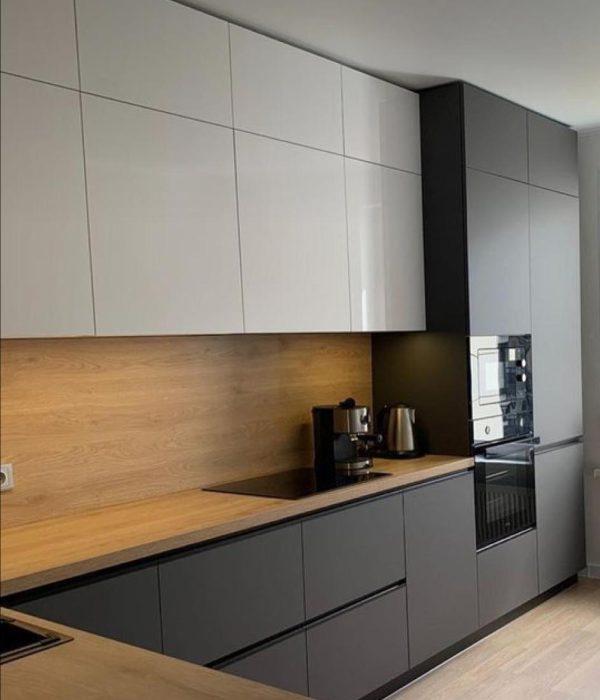
What is a heat-resistant kitchen countertop?
The heat-resistant countertop is designed to withstand temperatures of approximately 60°C. It is made from a raw chipboard panel covered with a decorative melacart foil, which gives the product added durability.
What are the advantages of heat-resistant countertops?
- wide range of colors, patterns, and textures available for both the countertop and backsplash;
- easy to clean;
- durability;
- easy to work with;
- low cost.
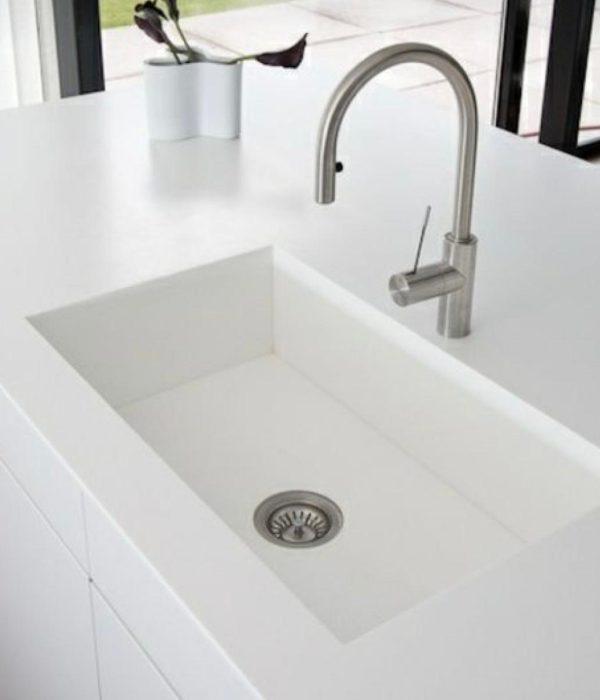
What is a composite countertop?
The brand that originally held the patent for this material is Corian, which belongs to the DuPont group. Later on, other competitors entered the market. It is essentially a material composed of acrylic resins and minerals in varying proportions.
The material is already well-known for its exceptional physical and chemical properties:
– it is hard, uniform, and non-porous, resistant to chemical agents;
– it is non-toxic and hypoallergenic, making it widely used in clinics, laboratories, and public spaces;
– it is easy to clean;
– it is thermoformable, some types even close to a 0-degree angle, allowing you to create any fluid shape;
– it is completely water-resistant, does not rot, and does not peel;
– it can be used to create a seamless effect with an integrated sink built directly into the countertop.
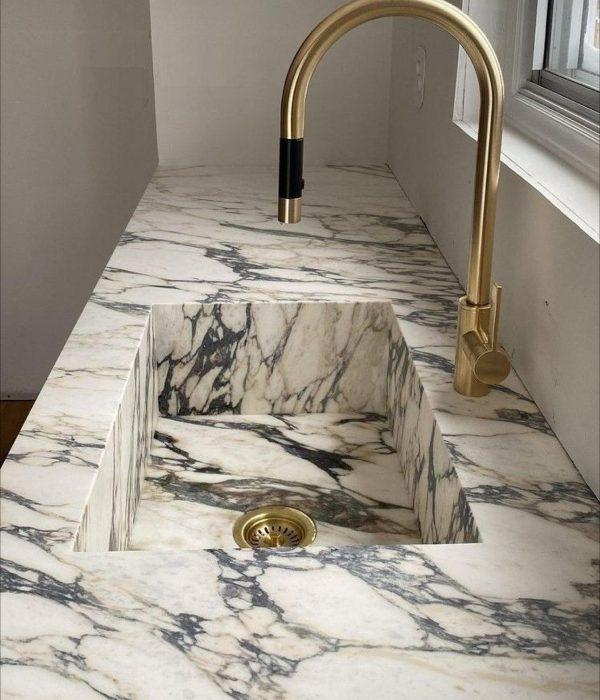
What is a ceramic countertop?
The ceramic used for countertops is made from a blend of natural clay and mineral pigments, and it comes in slab format of up to 160x230 cm, with thicknesses ranging from 6 to 20 mm.
– resistant to high temperatures up to 100°C and to UV rays;
– scratch-resistant;
– completely waterproof, hygienic, and easy to clean;
– allows for continuous surfaces between the countertop, sink, and backsplash.